
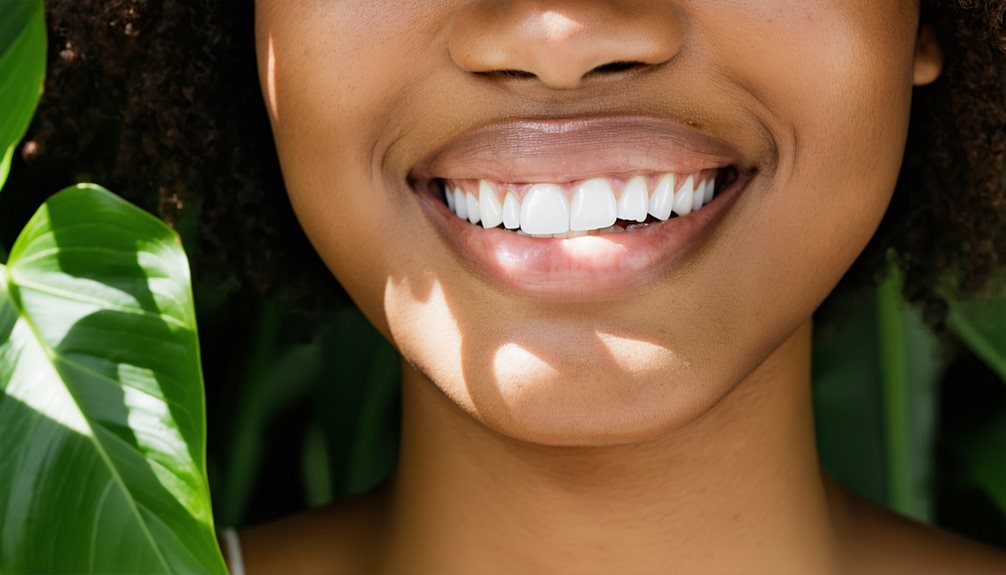
Choosing teeth whitening for sensitive smiles addresses both aesthetic improvement and the specific needs of those with dentin hypersensitivity. Professional whitening uses clinically tested techniques, incorporating desensitizing agents like potassium nitrate to minimize sensitivity. High-concentration bleaching agents are applied within a controlled environment, reducing risks of enamel erosion and discomfort. Customized treatment plans and innovative gel formulations allow gradual whitening, catering to individual dental profiles. Post-treatment, desensitizing and remineralizing agents reinforce enamel integrity. The selection of whitening agents is meticulous, ensuring safety and efficacy. Continue to explore ideal methods for achieving a brighter smile with minimal discomfort.
Understanding Sensitive Teeth
Sensitive teeth, clinically referred to as dentin hypersensitivity, is a common dental condition characterized by a sharp, transient pain arising from exposed dentin surfaces in response to thermal, chemical, or tactile stimuli. This phenomenon primarily affects individuals when the protective enamel or cementum is compromised, exposing the underlying dentin tubules.
Tooth anatomy reveals that these microscopic tubules connect to the dental pulp, which houses the tooth’s nerve function, leading to heightened sensitivity.
The pathophysiology of dentin hypersensitivity involves the hydrodynamic theory, which suggests that fluid movement within the dentin tubules stimulates nerve endings, causing acute discomfort. This condition is often exacerbated by factors such as dietary acids, aggressive brushing, or periodontal disease, which further expose the dentin layer.
Innovative approaches in dental care aim to mitigate this discomfort by fortifying the tooth structure, utilizing materials that occlude the tubules and minimize fluid movement.
Understanding the intricate nerve function within the dental pulp is pivotal for developing advanced therapeutic interventions. Research is directed towards biomimetic materials and novel formulations that offer targeted relief while preserving oral health.
As dental technology evolves, promising new solutions for managing dentin hypersensitivity continue to emerge, catering to the needs of individuals seeking both comfort and innovation in dental care.
Benefits of Professional Whitening
Professional teeth whitening offers significant advantages for individuals with sensitive teeth, including enhanced whitening results achieved through clinically tested techniques and materials.
This approach minimizes the risk of sensitivity by employing tailored desensitizing agents and lower concentrations of bleaching compounds, supported by evidence-based research.
Additionally, customized treatment plans are developed to accommodate the unique dental profiles and needs of each patient, ensuring ideal outcomes while prioritizing oral health.
Enhanced Whitening Results
Often regarded as the gold standard in cosmetic dentistry, professional teeth whitening offers a range of enhanced results that are difficult to achieve through over-the-counter products.
The sophisticated whitening techniques employed in a clinical setting are tailored to individual dental needs, ensuring maximum efficacy and precision. These techniques exploit high-concentration bleaching agents that penetrate deeper into the enamel, breaking down intrinsic stains where conventional methods falter. Consequently, patients experience a more pronounced and lasting whitening effect.
The benefits of professional whitening are underpinned by its innovative approach, leveraging cutting-edge technology and evidence-based practices. Unlike generic solutions, the professional process is meticulously calibrated, offering a controlled environment that minimizes variability and maximizes results.
As a result, patients receive a personalized treatment plan that aligns with their unique dental profile.
- Tailored Whitening: Customized treatments cater to individual enamel composition, ensuring uniformity and avoiding patchy results.
- Advanced Agents: Utilization of medical-grade bleaching agents increases the penetration depth, achieving superior stain removal.
- Innovative Techniques: Adoption of state-of-the-art technologies, such as laser or LED activation, enhances the effectiveness of the whitening process.
Reduced Sensitivity Risks
A considerable advantage of professional teeth whitening is the substantial reduction in sensitivity risks, a common concern among individuals with sensitive teeth. This benefit primarily stems from advanced sensitivity reduction techniques employed by dental professionals, guaranteeing that the whitening process is both effective and comfortable.
Unlike over-the-counter products, which often use harsh chemicals, professional treatments utilize gentle whitening products specifically designed for sensitivity management. These products contain desensitizing agents that help alleviate discomfort, allowing patients with sensitive teeth to achieve whiter smiles without compromising their oral health.
The innovative approach adopted in professional settings involves a meticulous selection of whitening agents, which are scientifically formulated to minimize enamel erosion and dentin exposure—two critical factors contributing to heightened sensitivity.
Dental practitioners are trained to adjust concentrations and application durations, tailoring the process to individual needs and guaranteeing premier results with minimal discomfort. In addition, the professional oversight guarantees that any potential adverse reactions are promptly addressed, considerably reducing risks compared to self-applied methods.
Customized Treatment Plans
Building on the reduced sensitivity risks associated with professional teeth whitening, another significant advantage is the development of customized treatment plans. This approach involves personalized assessments that consider the unique dental anatomy and sensitivity levels of each patient.
Unlike over-the-counter solutions, professional whitening leverages data-driven insights to formulate tailored recommendations that maximize efficacy while minimizing discomfort.
Customized treatment plans not only enhance the whitening experience but also align with the latest innovations in dental care. These plans are meticulously crafted by dental professionals utilizing cutting-edge diagnostic tools and advanced whitening technologies.
The process is both precise and adaptable, allowing for modifications based on ongoing assessments and patient feedback.
Key components of these plans include:
- Personalized Assessments: Thorough evaluation of individual dental health to guarantee compatibility with whitening agents.
- Tailored Recommendations: Specific guidelines and product choices designed to achieve ideal results while safeguarding enamel integrity.
- Ongoing Monitoring: Regular follow-ups to adjust treatment as necessary, guaranteeing sustained improvements and addressing any emerging sensitivity issues.
In essence, customized treatment plans offer a scientifically grounded, patient-centric approach, epitomizing the forefront of dental innovation and enhancing the overall whitening experience for sensitive smiles.
Choosing the Right Whitening Method
Selecting an appropriate teeth whitening method for individuals with sensitive teeth necessitates a careful evaluation of sensitivity-friendly options.
Evidence suggests that professional whitening treatments often provide more controlled application and gentler formulations compared to DIY solutions, reducing the risk of exacerbating sensitivity.
Sensitivity-Friendly Whitening Options
For individuals with sensitive teeth, selecting an appropriate whitening method requires careful consideration of both efficacy and comfort. The market offers a range of sensitivity-friendly options that cater to those who wish to achieve a brighter smile without exacerbating dental discomfort.
Prior to selecting a whitening treatment, it is advisable to conduct sensitivity tests to determine the susceptibility of one’s teeth to increased sensitivity. These tests can inform the choice of whitening gels specifically formulated to minimize irritation.
Sensitivity-friendly whitening gels often incorporate lower concentrations of active bleaching agents, such as hydrogen peroxide or carbamide peroxide. This adjustment aims to reduce the risk of sensory nerve stimulation while still delivering desirable whitening results.
Additionally, advancements in dental technology have led to the development of whitening agents that include desensitizing ingredients, such as potassium nitrate or fluoride, which can provide an additional layer of protection for sensitive teeth.
- Customized sensitivity assessment: Tailor your whitening method based on individual sensitivity levels determined through professional testing.
- Innovative gel formulations: Opt for gels with desensitizing agents designed to mitigate discomfort.
- Gradual whitening progression: Consider treatments that offer slower, controlled whitening to minimize sensitivity.
Professional vs.
Similar topics
DIY Solutions
While sensitivity-friendly whitening options provide a foundation for comfortable dental care, determining whether to pursue a professional or DIY approach necessitates a nuanced evaluation of both efficacy and safety.
Professional teeth whitening services, administered by dental practitioners, typically employ customized bleaching agents that offer precise concentration control, thereby minimizing potential irritation for sensitive smiles. Clinical supervision guarantees adherence to safety protocols, providing a reliable pathway to achieving ideal results with minimal discomfort.
Conversely, DIY solutions, such as home remedies and whitening kits, offer accessibility and convenience.
Whitening kits often contain lower concentrations of bleaching agents compared to professional treatments, which can be beneficial for individuals with heightened sensitivity.However, their efficacy is variable, and improper use may exacerbate sensitivity or damage enamel. Home remedies, such as baking soda or hydrogen peroxide mixtures, while popular, lack robust scientific validation and carry risks of inconsistent results and potential enamel erosion.
For those seeking innovation in dental aesthetics, the choice between professional or DIY whitening should be informed by individual sensitivity levels, desired outcomes, and a thorough understanding of each method’s limitations.
Consulting with dental professionals can aid in selecting an approach that aligns with both aesthetic goals and oral health considerations.
Safe Whitening Techniques
Achieving a whiter smile without compromising the health of sensitive teeth requires employing techniques that are both effective and gentle. For individuals with sensitive smiles, the adoption of natural whitening agents and gentle formulas is vital. These methods minimize enamel damage while still offering noticeable results.
Evidence suggests that natural ingredients, such as baking soda and hydrogen peroxide, can be integrated into whitening formulas to safely lighten tooth color without causing undue sensitivity.
Innovative advancements in dental care have led to the development of specialized products designed specifically for sensitive teeth. These products include low-abrasion toothpastes and whitening gels formulated to reduce discomfort.
By selecting products with lower concentrations of whitening agents, individuals can achieve gradual brightening, thereby limiting potential irritation to the dentin and nerves.
When considering safe whitening techniques, it is essential to focus on:
- Natural Whitening Agents: Utilizing components like charcoal or coconut oil for a less abrasive approach.
- Gentle Formulas: Opting for products with reduced peroxide levels to safeguard tooth enamel.
- Customized Treatment Plans: Consulting dental professionals to tailor whitening regimens that address individual sensitivity levels effectively.
Managing Sensitivity Post-Treatment
Following a teeth whitening procedure, individuals with sensitive teeth may experience heightened discomfort, necessitating careful management to alleviate symptoms. Sensitivity management is essential in post-treatment care to guarantee ideal outcomes and patient satisfaction.
A vital approach involves utilizing desensitizing agents such as potassium nitrate or fluoride, which have been shown to mitigate nerve response in dentin hypersensitivity effectively. Additionally, incorporating remineralizing agents like calcium phosphate can assist in reinforcing enamel integrity, further reducing sensitivity.
Post-treatment care should also include patient education on modifying dietary habits to avoid acidic or hot and cold stimuli, which can exacerbate discomfort.
Innovative advancements in dental technology have introduced bioactive materials that can integrate with the tooth structure, offering long-term relief for sensitive patients. These materials facilitate enamel regeneration and enhance overall tooth resilience, representing a significant leap in contemporary sensitivity management.
Moreover, employing customized whitening trays can minimize gum irritation and guarantee even distribution of whitening agents, reducing the likelihood of sensitivity.
Adopting a thorough, evidence-based approach to sensitivity management not only alleviates post-treatment discomfort but also promotes sustained oral health, aligning with the evolving demands of modern dental care.
Finding the Best Dentist
Selecting the right dentist is essential for guaranteeing ideal dental health and successful treatment outcomes. When seeking teeth whitening solutions for sensitive smiles, the importance of a dentist’s qualifications cannot be overstated. A dentist with specialized training in cosmetic procedures will be better equipped to assess and address individual sensitivity issues.
Additionally, patient reviews serve as a valuable resource that can offer insights into a dentist’s expertise, demeanor, and the overall quality of care provided.
To identify a dentist who meets these criteria, consider the following:
-
Accreditation and Continued Education: Confirm that the dentist holds relevant qualifications and engages in ongoing professional development to stay abreast of the latest advancements in cosmetic dentistry.
-
Technological Proficiency: Innovative dental practices incorporate state-of-the-art technology, which can enhance the precision and comfort of whitening procedures, especially for those with sensitive teeth.
-
Patient-Centric Approach: Examine patient reviews to gauge the dentist’s ability to tailor treatments to individual needs, particularly for those with heightened tooth sensitivity.
Frequently Asked Questions
How Does Diet Affect Teeth Sensitivity and Whitening Results?
Dietary impacts markedly influence teeth sensitivity and whitening efficacy. Acidic food choices can erode enamel, intensifying sensitivity, while a balanced diet rich in calcium and phosphate supports enamel health, optimizing whitening outcomes. Innovation in treatment strategies is essential.
Are There Natural Remedies for Whitening Sensitive Teeth?
Exploring effective methods for whitening sensitive teeth, natural ingredients like baking soda and hydrogen peroxide serve as viable options. Evidence suggests these components can gently enhance dental aesthetics while minimizing discomfort, appealing to those seeking innovative solutions.
Can Lifestyle Changes Reduce Tooth Sensitivity?
Implementing lifestyle modifications, such as reducing consumption of acidic foods and beverages, utilizing soft-bristled toothbrushes, and employing fluoride treatments, can mitigate sensitivity triggers effectively. Emerging research supports these strategies in reducing tooth sensitivity, enhancing oral health resilience.
How Long Do Whitening Results Typically Last?
The whitening duration typically spans from six months to three years, contingent on individual habits. Results maintenance can be optimized through regular dental check-ups and adherence to recommended oral hygiene practices, ensuring prolonged aesthetic benefits and innovative smile care.
What Are Alternative Treatments for Sensitive Smiles?
For individuals seeking alternative whitening options for sensitive teeth, desensitizing treatments such as potassium nitrate gels or fluoride varnishes can be effective. These approaches minimize discomfort while achieving desired whitening results through innovative, evidence-based methodologies.
Conclusion
In summary, the selection of teeth whitening for individuals with sensitive smiles necessitates a thorough understanding of oral sensitivity and the tailored application of whitening techniques. Professional whitening offers significant advantages, ensuring both efficacy and safety under expert supervision. Careful method selection and adherence to safe practices minimize adverse effects, while post-treatment sensitivity management enhances patient comfort. Consulting with a qualified dental professional is vital to optimize outcomes and maintain oral health, ensuring the best possible results for sensitive teeth.

